Houseplant
Is Amaryllis toxic to cats and dogs?
Hippeastrum species · also called Belladonna lily, naked lady
Cats
ToxicDogs
ToxicAmaryllis is toxic to cats and dogs, especially the bulb. It causes vomiting, drooling and diarrhoea; large amounts can cause tremors and low blood pressure.
 By Maya Hart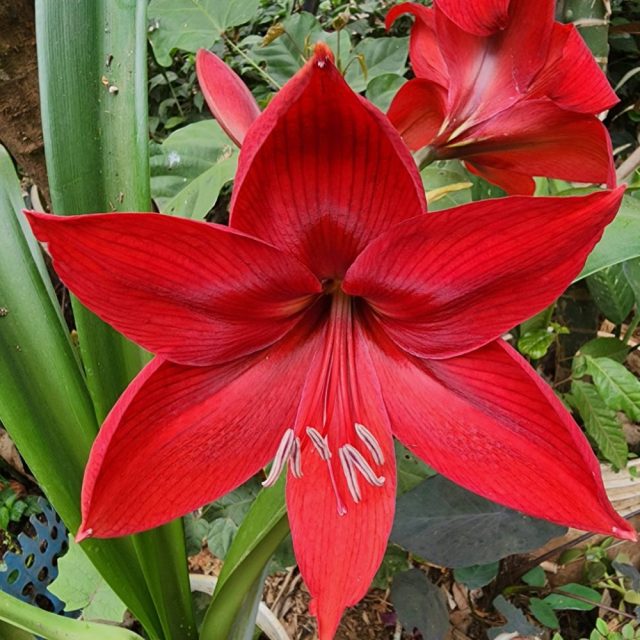
If your pet chewed it
- Call your vet or a pet poison helpline, tell them the plant name (a photo helps) and how much was chewed.
- Rinse your pet’s mouth with water and remove any plant material from the fur.
Signs to watch for
- Vomiting
- Drooling
- Diarrhoea
- Belly pain
- Tremors (large amounts)
What is harmful
- Parts
- All parts, especially the bulb
- Substance
- Lycorine and other alkaloids
The details
Amaryllis bulbs are sold boxed for winter forcing and often sit on low shelves, where a dog can chew one. Despite the name “belladonna lily”, it does not cause the kidney failure that true lilies cause in cats.
Pet-safe alternatives



Questions owners ask
Is Amaryllis toxic to cats?
Yes — toxic to cats. Harmful parts: all parts, especially the bulb.
Is Amaryllis toxic to dogs?
Yes — toxic to dogs. Harmful parts: all parts, especially the bulb.
What happens if a pet eats amaryllis?
vomiting, drooling, diarrhoea, belly pain, tremors (large amounts).
What should I do if my pet chewed it?
Call your vet or a pet poison helpline, tell them the plant name (a photo helps) and how much was chewed. Rinse your pet’s mouth with water and remove any plant material from the fur.
What are pet-safe alternatives to amaryllis?
Christmas cactus, Moth orchid, African violet.
Sources
Tailwise is for general information and is reviewed by veterinary professionals, but it is not a substitute for advice from your own vet, who knows your pet. How we check facts