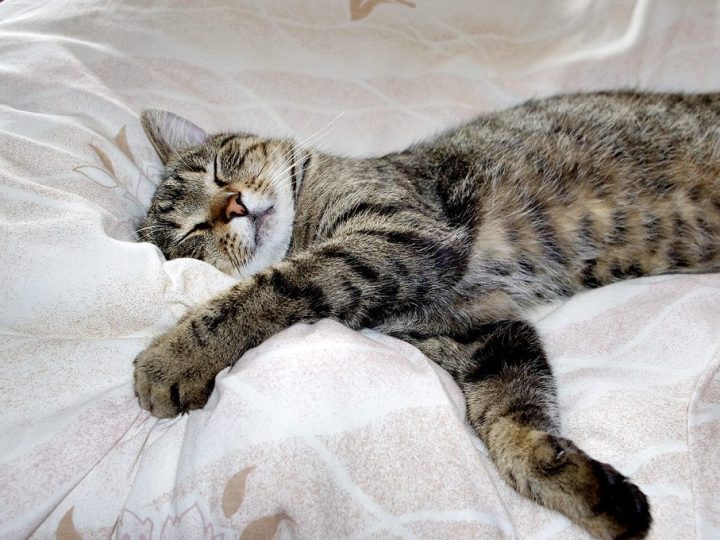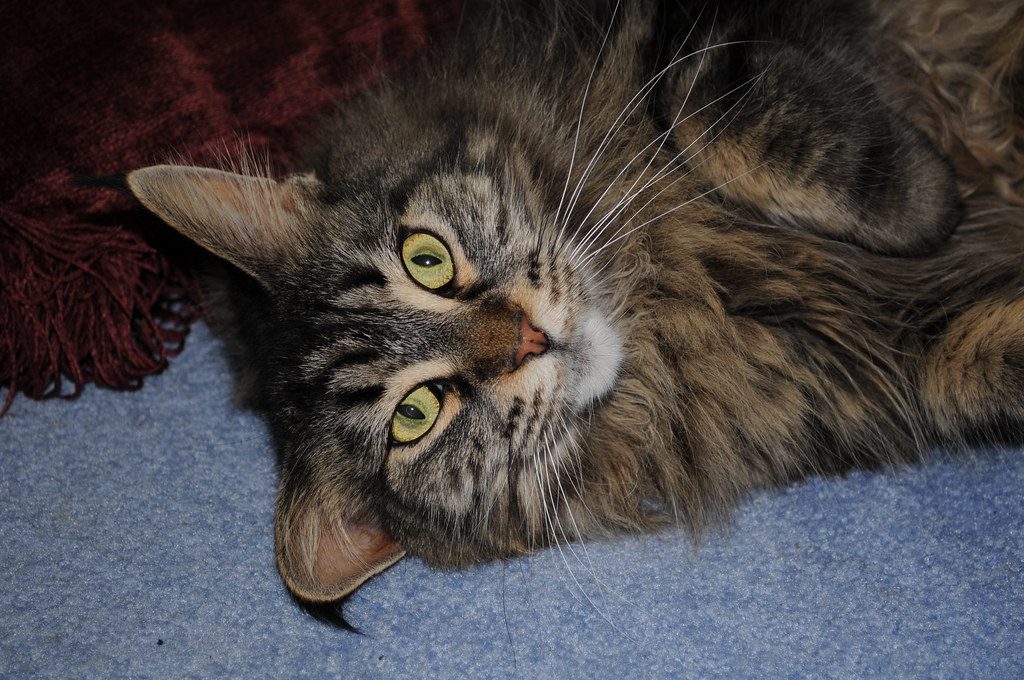
A cat can sit on the windowsill with a broken tooth and look entirely at peace. It is not that cats feel less than we do. It is that, for most of their evolutionary history, showing weakness made a small predator into prey. They are experts at looking fine.
The good news is that pain leaves traces — small changes you, of all people, are best placed to notice.
Look at the face
Researchers at the Université de Montréal developed the Feline Grimace Scale by studying the faces of cats before and after pain relief. Five things change:
- Ears flatten and turn outwards.
- Eyes narrow or squint.
- The muzzle becomes tense and slightly oval.
- Whiskers straighten and move forward.
- The head is held below the shoulders.
A cat showing several of these at rest is likely to be uncomfortable. Once you have seen it, you will not unsee it.
Look at the posture
Cats in pain often sit hunched, with their paws tucked tightly and their back rounded, as if bracing. Some lie in unusual positions or stay in one spot for hours. Others stop jumping up to favourite places — the top of the wardrobe goes unvisited, and you realise you have not seen them on it for weeks.
Look at the habits
The changes that tell you most are changes against your own cat’s normal:
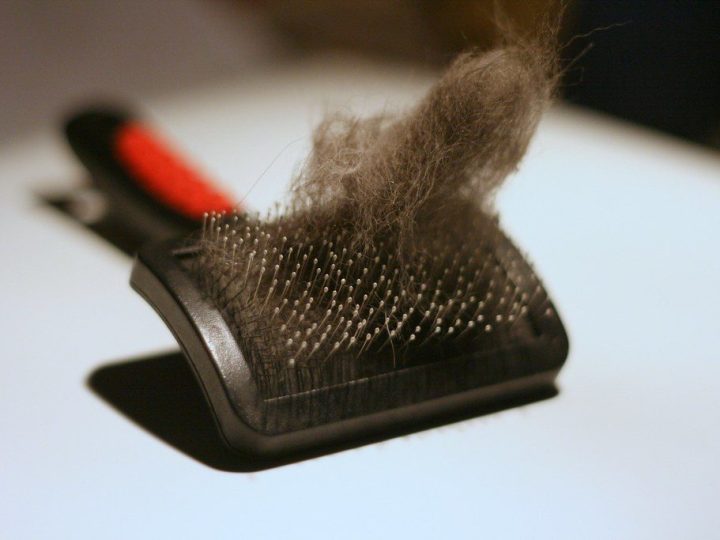
- Grooming less (a scruffy coat along the back often means sore joints), or over-grooming one spot.
- Using the litter tray less, or going just outside it — high sides can be painful to step over.
- Eating less, chewing on one side, or dropping food.
- Hiding more, or being unusually clingy.
- Irritability when touched in a particular place.
A cat that is straining in the litter tray, breathing with its mouth open, or has stopped eating for a day needs a vet today — not tomorrow.
Arthritis is the pain nobody notices
Studies using X-rays have found signs of arthritis in the majority of cats over twelve. Most owners had simply thought their cat was slowing down. Arthritis pain is very treatable: modern medicines, weight control, lower-sided litter trays and steps up to favourite perches can give older cats years of better movement.
What to do
Write down what you have noticed and, if you can, film it — cats rarely perform at the vet. Book a check-up and bring your notes. Never give a cat human painkillers: paracetamol can kill a cat, and ibuprofen and aspirin are dangerous too.
Your cat will not tell you. But the chair left empty, the leap not taken, the ears held a little wide — those are the words they have.

Written by
Sam writes our breed and behaviour guides. (Demo profile supplied with the Tailwise theme.)

Reviewed by
Tailwise is for general information and is reviewed by veterinary professionals, but it is not a substitute for advice from your own vet, who knows your pet. How we check facts