A crate is not a cage in the way we imagine a cage. For a young dog, it can be a bedroom: a small, safe place where nobody steps on you, where the house makes sense, and where sleep comes easily. Many adult dogs choose their crate long after the door has been taken off.
It only works if the crate is always a good place. Never a punishment, never a place to be forgotten.
Choose the right crate
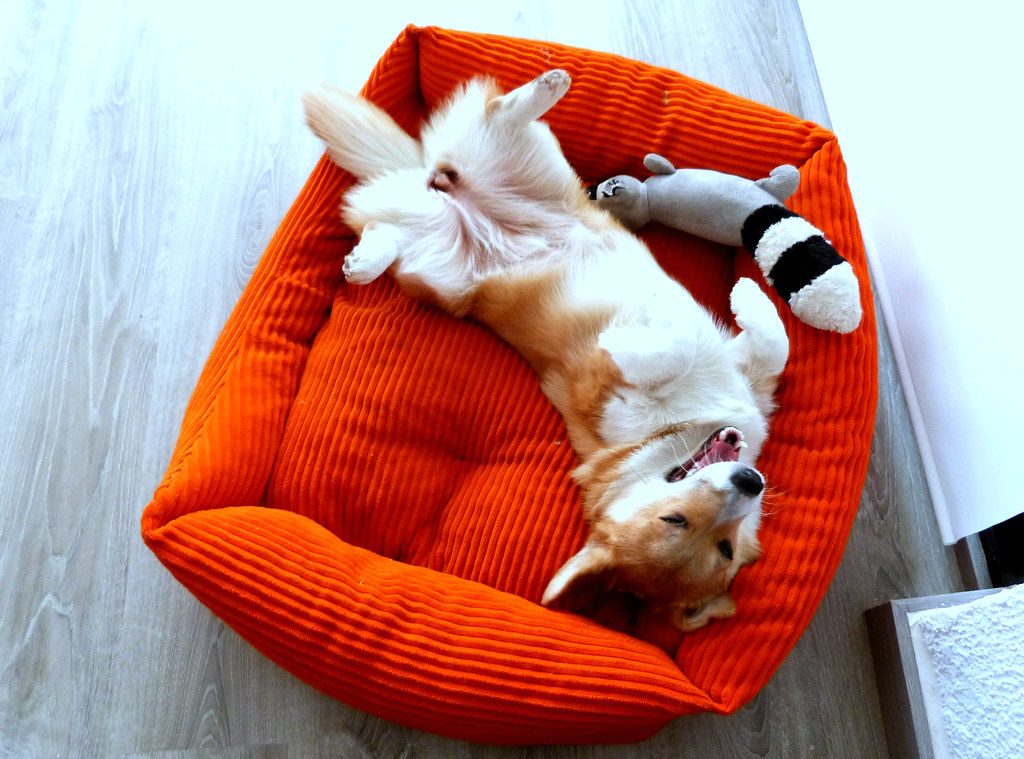
Your puppy should be able to stand up, turn around and lie stretched out. Too big, and a puppy may use one end as a toilet. Many crates come with a divider so the space can grow with your dog. Put a comfortable bed inside and drape a blanket over the top and back for a den-like feel, leaving the front open.
Stage 1: the crate is where good things happen
Leave the door open. Drop treats inside when your puppy is not looking so that they “find” them. Feed meals in or beside the crate. Put a favourite chew in there. Don’t close the door yet — just let the crate become interesting.
Stage 2: the door closes, briefly
When your puppy walks in happily, close the door for a few seconds while they eat a chew, then open it before they ask to come out. Build up to a minute, then several, with you in the room.
Stage 3: you leave the room
Close the door, give a long-lasting chew, and step out of sight for a few seconds. Come back calmly — no big greetings. Build up slowly over days. If your puppy cries, wait for a pause, however short, before you open the door, so that calm, not noise, opens it.
Stage 4: nights and short absences
At night, keep the crate beside your bed for the first weeks. Take your puppy out to toilet during the night at first — young puppies genuinely can’t hold on until morning. Gradually move the crate to where you want it long-term.
How long is too long?
A crate is for short periods and sleep, not for a working day. Young puppies need a toilet trip every one to two hours during the day, and adult dogs should not be crated for more than a few hours at a stretch.
If you work away from home, a puppy-proofed room or a pen attached to the crate gives more space, and a dog walker or neighbour can break up the day.
Troubleshooting
- Crying the moment the door closes: go back a stage; you moved too fast.
- Accidents in the crate: it may be too big, or the absences too long.
- Panic — drooling, scrabbling, bent teeth: stop crating and talk to your vet or a behaviourist. That is distress, not protest, and it can be a sign of separation anxiety.
The goal is the day you find your dog asleep in the crate with the door wide open, and realise they chose to be there.
Questions owners ask
Should I cover my puppy’s crate?
Many puppies settle better with a blanket over the top and back, which makes the crate feel like a den. Leave the front open for air and watch that your puppy doesn’t pull the cover in and chew it.
Should I ignore my puppy crying in the crate at night?
In the first weeks, a crying puppy may genuinely need the toilet. Take them out quietly, with no play, and return them to bed. Keeping the crate beside your bed helps them settle without you having to get up as often.
Can I use a crate for an adult rescue dog?
Yes, but introduce it just as gradually, and never force a dog in. Some dogs with past trauma or separation anxiety feel trapped in crates and do better with a gated room.

Written by
Sam writes our breed and behaviour guides. (Demo profile supplied with the Tailwise theme.)

Reviewed by
Tailwise is for general information and is reviewed by veterinary professionals, but it is not a substitute for advice from your own vet, who knows your pet. How we check facts