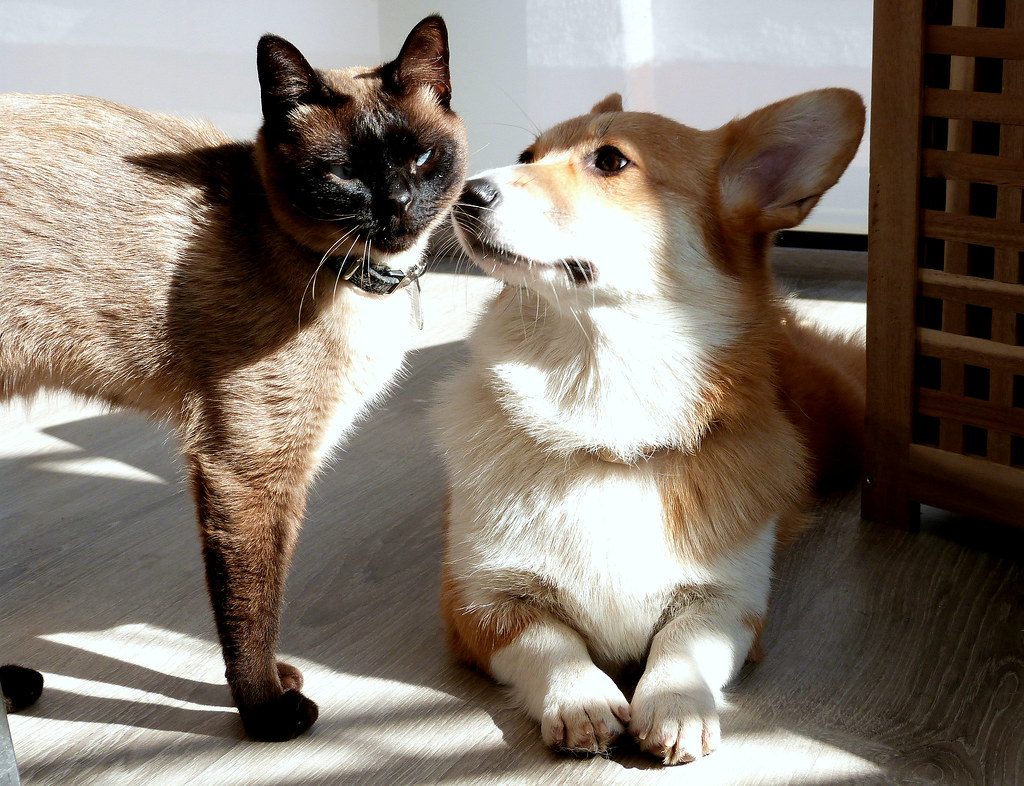
Some of the most unlikely friendships in the animal world happen on the sofa: a large dog and a small cat asleep in a heap. They rarely begin that way. A cat’s first instinct with a dog is to flee or defend; a dog’s is often to chase. The introduction is about giving both animals a different option.
Before they meet
- Give the cat a dog-free zone — a room with a gate the cat can jump over or a cat flap, containing food, water and litter.
- Add high places everywhere: shelves, cat trees, the top of a bookcase. A cat that can get above a dog feels safe.
- Teach the dog a solid “leave it”, “sit” and “look at me” with treats before the first meeting.
Step 1: scent first
As with cat-to-cat introductions, swap bedding for a few days so each animal gets used to the other’s smell.
Step 2: the first look
With the dog on a lead and calm — after a long walk is ideal — let the cat come into the room, or see the dog through a gate. Reward the dog generously for looking away from the cat, sitting or lying down. Let the cat choose the distance. Keep it short.
Step 3: repeat, many times
Several short, boring sessions a day are worth more than one long exciting one. You are aiming for a dog who notices the cat and then turns back to you, and a cat who walks through the room without rushing.
Step 4: loose lead, then off lead
When the dog is relaxed on a loose lead, let them trail it indoors so you can step on it if needed. Only move to unsupervised time when you have seen calm behaviour for weeks, and keep the cat’s safe room available always.
Stop and get professional help if the dog stiffens, stares fixedly, trembles, whines with excitement or lunges at the cat. Some dogs — especially those bred for chasing — may never be safe with cats unsupervised.
Which dogs find it easiest
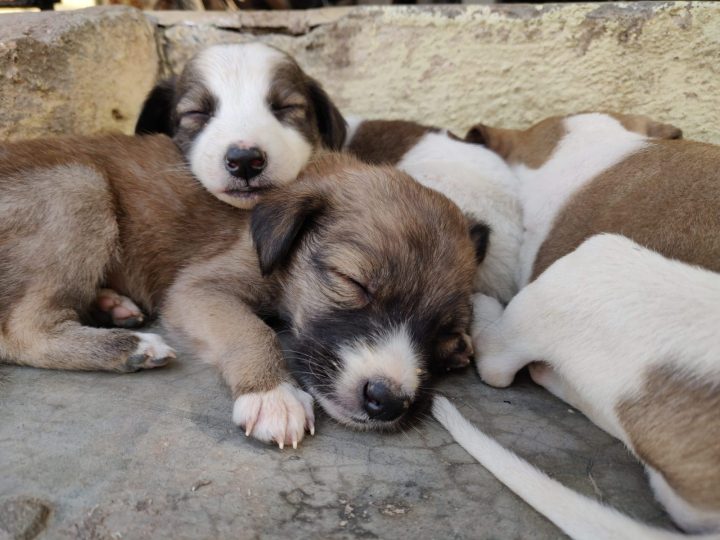
Puppies and calm adult dogs usually adapt best. Dogs with a strong prey drive — many sighthounds and terriers, for example — can live with cats, but need extra care and some never can. If you are adopting, ask the rescue whether the dog has been tested with cats.
Cats have limits too
Kittens and confident cats often adjust quickly. Nervous or elderly cats may take months. Watch for your cat hiding more, eating less, or toileting outside the tray — stress signs that mean slowing down.
Friendship isn’t guaranteed. Mutual tolerance is a fine outcome, and often, given time, the heap on the sofa follows.
Questions owners ask
Which dog breeds are best with cats?
Individual temperament matters more than breed, but calm companion breeds and many gundogs often do well. Breeds with strong chase instincts, such as many terriers and sighthounds, need extra care.
Can a dog and cat share a water bowl?
They can, but it is better for each to have their own food and water stations. The cat’s should be somewhere the dog can’t reach, so the cat never has to eat or drink under pressure.
What if my cat attacks my dog?
Some confident cats swat to set boundaries, which can be healthy. Make sure the dog can move away and the cat has high escape routes; persistent attacks suggest the cat is stressed and needs more space.

Written by
Maya edits every page before it goes to review and keeps the reference library up to date. (Demo profile supplied with the Tailwise theme — replace it with your own team.)

Reviewed by
Tailwise is for general information and is reviewed by veterinary professionals, but it is not a substitute for advice from your own vet, who knows your pet. How we check facts