Cats are fastidious by nature. When a cat that has used a litter tray for years starts peeing on the bath mat, the bed or a pile of laundry, something has changed — in their body, their tray or their world. Cats don’t do it out of spite. They do it because something about the tray has become worse than the alternative.
Step 1: rule out medical causes
See your vet first, especially if the change is sudden. Common medical reasons include:
- Cystitis — often stress-related inflammation of the bladder (feline idiopathic cystitis), which makes peeing painful and urgent.
- Urinary infections and crystals.
- Arthritis — high-sided trays become painful to climb into.
- Kidney disease, diabetes or an overactive thyroid — all increase the amount of urine.
A cat — especially a male cat — straining in the tray and producing little or no urine may be blocked. That is an emergency: go to a vet now.
Step 2: the litter box checklist
How many? One per cat, plus one — in different places, not side by side.
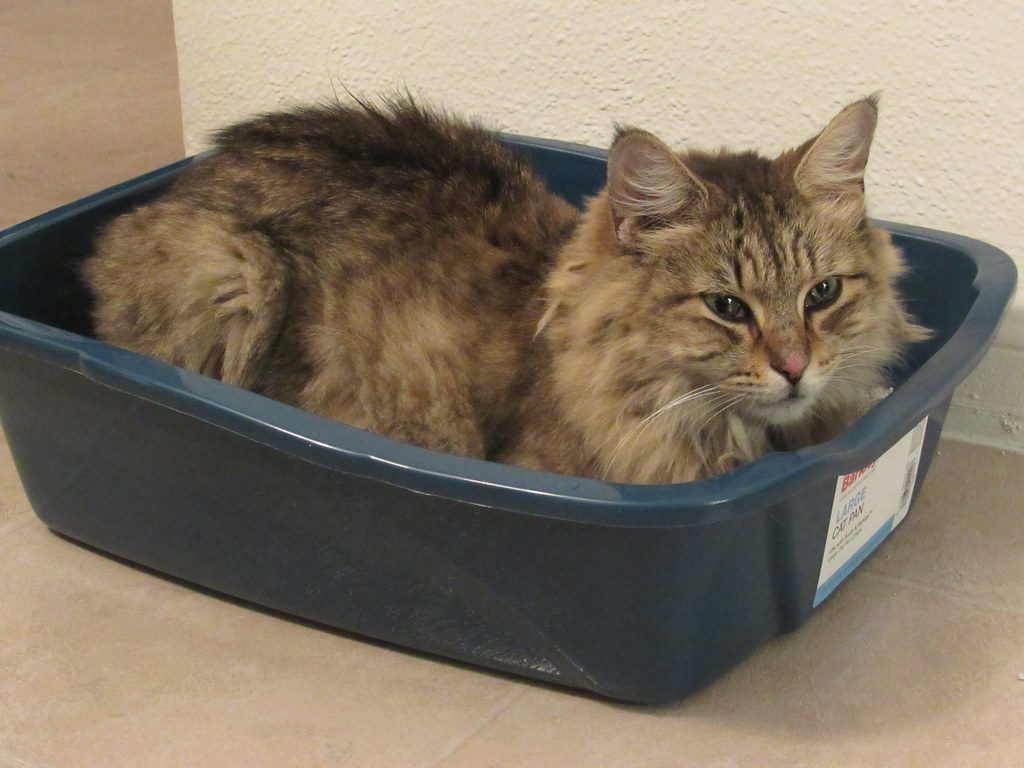
How big? Bigger than most shop-bought trays: about one and a half times the length of your cat. A large storage box with a cut-down entrance works well.
Covered or open? Many cats prefer open trays: covers trap smells and can make a cat feel cornered.
Which litter? Most cats prefer fine, unscented clumping litter. Scented litter is designed for us, not them. Change type slowly, if at all.
How clean? Scoop at least once a day, and wash the tray fully every week or two with hot water and mild soap — not strong-smelling disinfectants.
Where? Quiet, private and easy to reach, away from food bowls, noisy washing machines and the dog. In multi-storey homes, one on each floor.
Step 3: look for stress
A new pet or baby, building work, a cat outside the window, or tension between cats in the house can all trigger house soiling. Cats under pressure may also spray — squirting small amounts of urine on vertical surfaces — which is a territorial message.
Step 4: clean properly
Use an enzymatic cleaner on soiled areas. Ordinary cleaners — and especially ammonia-based ones — leave a smell that invites the cat back. Temporarily make favourite spots less appealing: put a food bowl there, or cover it with foil.
Most cats return to the tray once the underlying problem is solved. Be patient: it can take a few weeks for a cat to trust the tray again.
Questions owners ask
Do cats pee outside the box out of spite?
No. Cats don’t act out of spite. House soiling is almost always a sign of a medical problem, discomfort with the tray, or stress.
What smell stops cats peeing in a spot?
Clean the area with an enzymatic cleaner first, so the urine smell is gone. Then make the spot less appealing — placing a food bowl there works better than strong smells, which can stress cats.
Is spraying the same as peeing outside the box?
Not quite. Spraying is a small amount of urine squirted on a vertical surface as a scent message, often linked to territory or stress. Neutering and reducing stress help; your vet can advise.

Written by
Sam writes our breed and behaviour guides. (Demo profile supplied with the Tailwise theme.)

Reviewed by
Tailwise is for general information and is reviewed by veterinary professionals, but it is not a substitute for advice from your own vet, who knows your pet. How we check facts