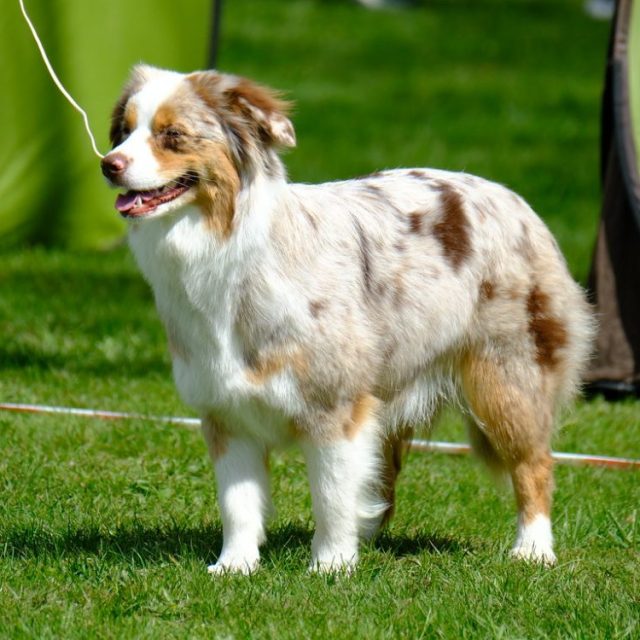
Dog breed · Herding
Australian Shepherd
Smart, energetic, devoted
- Size
- Medium
- Weight
- 16–32 kg (35–71 lb)
- Height
- 46–58 cm (18–23 in)
- Life span
- 12–15 years
- Origin
- United States
 By Maya Hart
The coat
Medium · Patches
Stroke it to see how it lies.
At a glance
Are Australian Shepherds right for you?
You will love
- Gentle and patient with children
- Quick to learn
Be ready for
- Happier with space and a garden
- Needs a lot of exercise every day
- Sheds a lot
- Several inherited health problems — choose a breeder who screens
How big, really
Adult Australian Shepherds weigh 16–32 kg (35–71 lb). Shoulder height shown at the top of the range.
About the Australian Shepherd
Despite the name, the Australian Shepherd was developed on ranches in the American West. Aussies are brilliant, tireless working dogs, and they need a real job — without one they invent their own, from herding children to redesigning the sofa. In an active home with plenty of training they are affectionate, funny and highly responsive.
The MDR1 mutation, common in herding breeds, makes some dogs dangerously sensitive to drugs such as ivermectin and loperamide. A simple cheek-swab test tells you whether your dog carries it. Responsible breeders never mate two merle dogs, because a quarter of the puppies can be born deaf or blind.
Health to know about
- MDR1 gene mutation — sensitivity to some common drugs; ask for a DNA test
- Hip and elbow dysplasia
- Collie eye anomaly and other eye conditions
- Epilepsy
- Deafness and blindness in puppies from merle-to-merle matings
Care in short
- At least two hours of activity and training daily
- Brush weekly, more during the moult
- Herding, agility or scent work to occupy the mind
- Tell every vet if your dog carries MDR1
Kit for a Australian Shepherd
We may earn a commission when you buy through links on this page. It never changes what we recommend.
Best for heavy shedders
Deshedding tool with ejector
4.7Reaches the undercoat that causes most of the hair on the sofa.
- Several blade widths
- Use weekly, gently
Best for short coats
Rubber grooming mitt
4.3Soft rubber nubs pick up loose hair and double as a massage.
- Works wet or dry
- Most pets enjoy it
Best for busy minds
Treat-dispensing puzzle toy
4.5Turns part of a meal into a ten-minute job for clever, energetic dogs.
- Adjustable difficulty
- Easy to wash
Similar breeds
| Trait | Australian Shepherd |  Border CollieCompare Border CollieCompare |
 German ShepherdCompare German ShepherdCompare |
 Bernese Mountain DogCompare Bernese Mountain DogCompare |
|---|---|---|---|---|
| Weight | 16–32 kg (35–71 lb) | 12–20 kg (26–44 lb) | 22–40 kg (49–88 lb) | 35–55 kg (77–121 lb) |
| Energy | 5/5 | 5/5 | 5/5 | 3/5 |
| Good with children | 4/5 | 3/5 | 4/5 | 5/5 |
| Shedding | 4/5 | 4/5 | 5/5 | 5/5 |
| Grooming needs | 3/5 | 3/5 | 3/5 | 3/5 |
| Trainability | 5/5 | 5/5 | 5/5 | 4/5 |
Questions owners ask
How big does a Australian Shepherd get?
Adults usually weigh 16–32 kg (35–71 lb) and stand 46–58 cm (18–23 in) tall.
How long do Australian Shepherds live?
Typically 12–15 years.
Are Australian Shepherds good with children?
Generally very good (4 out of 5 on our scale). Every dog or cat is an individual; always supervise young children.
Do Australian Shepherds shed?
Quite a lot — expect hair on furniture.
What health problems are Australian Shepherds prone to?
MDR1 gene mutation — sensitivity to some common drugs; ask for a DNA test; Hip and elbow dysplasia; Collie eye anomaly and other eye conditions; Epilepsy; Deafness and blindness in puppies from merle-to-merle matings.
Tailwise is for general information and is reviewed by veterinary professionals, but it is not a substitute for advice from your own vet, who knows your pet. How we check facts