Cats have a reputation for being mysterious. They aren’t, really — they just speak quietly. Where a dog might wag, bark and bounce, a cat communicates with the angle of an ear, the speed of a blink, and a tail that says more than most of us notice.
The tail
- Straight up, perhaps with a hooked tip: a friendly greeting. Cats approach cats they like, and people they like, with this “question mark” tail.
- Low or tucked: worry or fear.
- Puffed up: a frightened cat trying to look bigger.
- Twitching or thumping: irritation or high arousal — often the warning before a swipe during stroking.
- Wrapped around the body when sitting: content but reserved.
The eyes
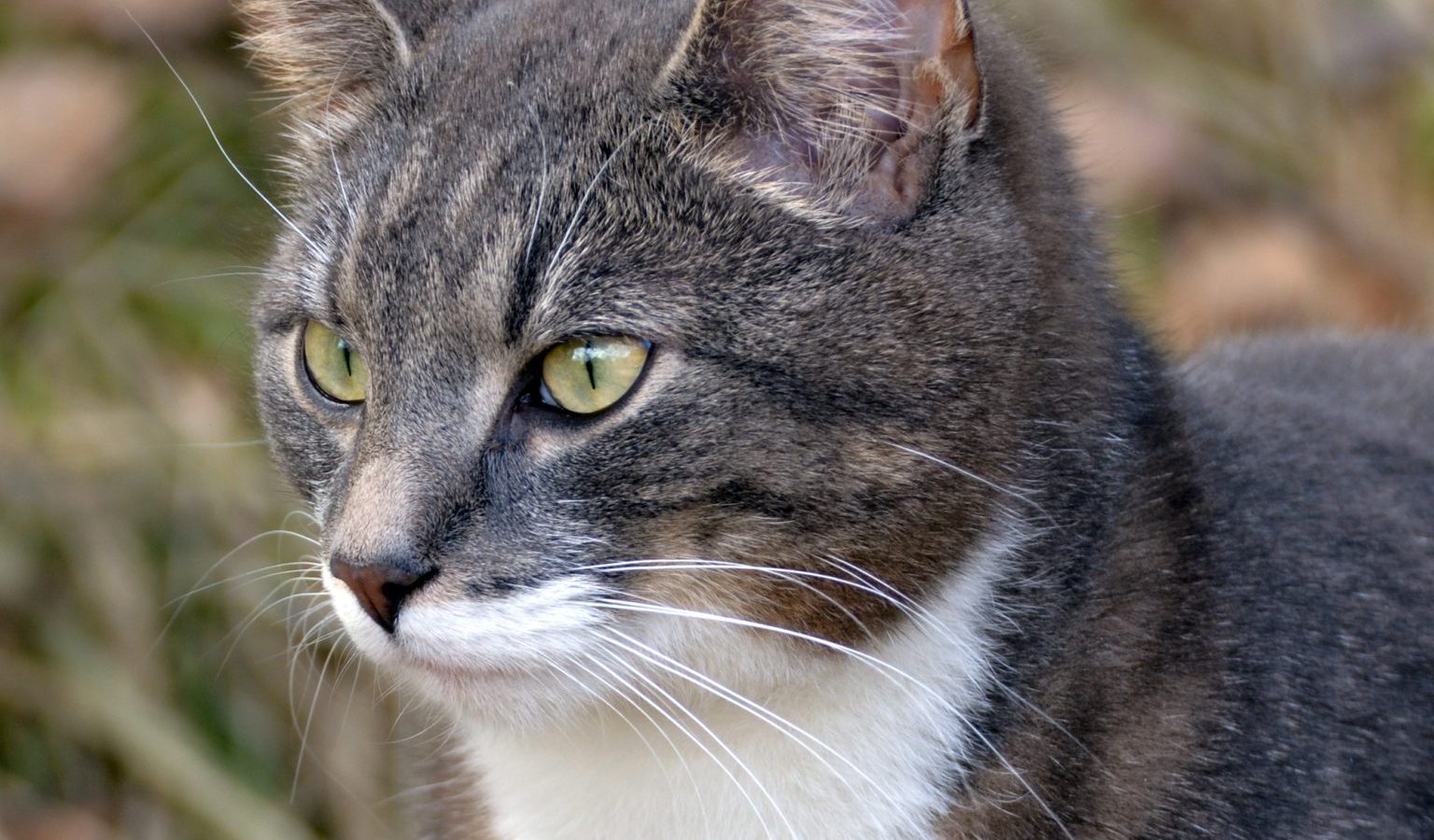
A long, slow blink is one of the most charming signals in the animal world: it signals relaxation and trust. Researchers found that cats are more likely to slow-blink back — and approach — people who slow-blink at them. Try it. Wide, dilated pupils can mean excitement, fear or play; a hard, unblinking stare can be a challenge.
The ears
Forward-facing ears mean interest. Ears swivelling constantly mean the cat is monitoring. Ears turned sideways or flattened back (“aeroplane ears”) mean fear or annoyance.
Posture
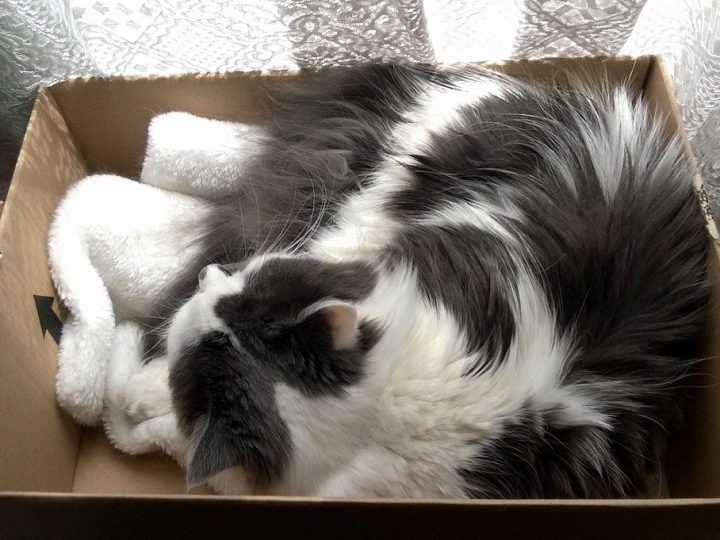
A relaxed cat lies stretched out or loafed with paws tucked. A crouched cat with weight back, tail wrapped tight and head low is uneasy. The arched “Halloween cat” posture with fur on end is a frightened cat trying to seem big.
The belly trap
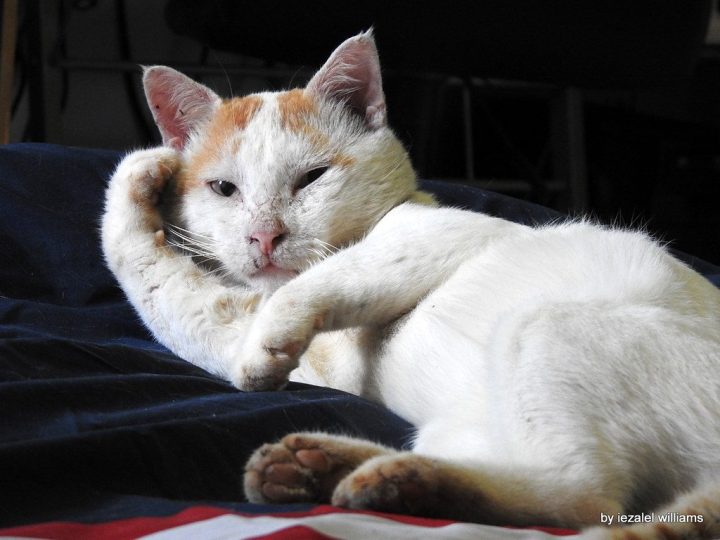
A cat rolling over to show the belly is showing trust — but it’s rarely an invitation to rub. Many cats will grab and kick a hand on the tummy. Scratch the cheeks instead.
Most cats prefer to be stroked on the head, cheeks and under the chin, where their scent glands are, rather than on the back, tail or belly. Short, gentle strokes and letting the cat choose to stay work better than long petting sessions.
Sounds
Adult cats rarely meow at each other; the meow seems to be mostly for humans. Purring usually means contentment, but cats also purr when stressed, in pain or unwell — a purring cat that is hiding or not eating needs checking. Hissing and growling mean “back off”.
Petting-induced aggression
Some cats enjoy being stroked for a while, then suddenly bite. The warning signs are usually there: tail flicking, skin rippling, ears turning back, head turning towards your hand. Stop before that point, and let your cat ask for more.
Questions owners ask
Why does my cat headbutt me?
Headbutting (“bunting”) deposits scent from glands on the face and is a sign of affection and belonging.
Why does my cat knead me?
Kneading comes from kittenhood, when kittens knead to get milk. In adults it usually means comfort and contentment.
Why does my cat bring me dead animals?
It’s natural hunting behaviour. Cats may bring prey home to a safe place. Don’t punish it — a collar with a bell, keeping cats in at dawn and dusk, and play sessions can reduce hunting.

Written by
Maya edits every page before it goes to review and keeps the reference library up to date. (Demo profile supplied with the Tailwise theme — replace it with your own team.)

Reviewed by
Tailwise is for general information and is reviewed by veterinary professionals, but it is not a substitute for advice from your own vet, who knows your pet. How we check facts