We may earn a commission when you buy through links on this page. It never changes what we recommend. Learn more
An indoor cat is protected from traffic, fights and many infectious diseases, and indoor cats often live longer. But a house can be a small world for a born hunter. Boredom shows up as overeating, over-grooming, night-time zoomies, scratching the wrong things, and cats that pick on each other.
The good news: a few changes make a big difference.
The five pillars
Feline welfare experts describe five essentials for a healthy cat environment:
- A safe place to hide and rest.
- Multiple, separated key resources — food, water, litter trays, scratching posts, play and resting places, not all in one spot.
- The chance to play and to hunt.
- Positive, predictable interaction with people — on the cat’s terms.
- An environment that respects the cat’s sense of smell.
Play like a hunt
Wand toys are the best tool. Make the toy behave like prey: scurry along the floor, hide behind a chair, pause, flutter. Let your cat stalk, pounce and catch it. End with a “catch” and a small meal or treat — hunt, catch, eat, groom, sleep is the natural cycle. Two or three short sessions a day beat one long one.
Laser pointers can frustrate some cats because there is never anything to catch. If you use one, finish by landing the dot on a toy they can grab. Always put string and ribbon toys away after play — swallowed string can cause serious intestinal damage.
Go vertical
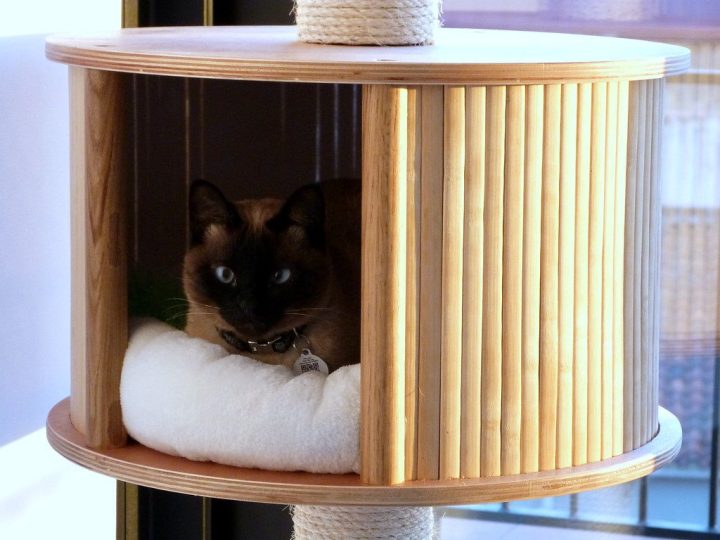
Cats feel safe up high. Cat trees, shelves and cleared window sills add territory without adding floor space — especially important in multi-cat homes, where height lets cats share a room comfortably.
Vertical space that helps
We may earn a commission when you buy through links on this page. It never changes what we recommend.
Best for indoor cats
Multi-level cat tree
4.4Climbing, perching and hiding in one piece of furniture.
- Several perches
- Replaceable posts
Make food work
Wild cats eat many small meals, each one earned. Food puzzles, treat balls and hiding portions around the house slow eating, burn calories and ease boredom. Start with easy puzzles so your cat succeeds.
A window on the world
A perch at a window, perhaps overlooking a bird feeder, gives hours of “cat TV”. Some owners add a secure catio or teach their cat to walk in a harness.
Rotate toys
Cats lose interest in toys that are always lying around. Keep a few out and rotate them weekly. Cardboard boxes and paper bags (handles removed) are free favourites.
Grass and scent
A pot of cat grass gives safe chewing. Catnip, silver vine or valerian toys excite many cats. Avoid essential oils and plug-in fragrances, which can be harmful and overwhelming for cats.
Questions owners ask
Is it cruel to keep a cat indoors?
Not if the environment meets their needs. Many cats live full, happy lives indoors with play, climbing space and attention.
Should I get a second cat so mine isn’t lonely?
Not necessarily. Many cats prefer to be the only cat. If you add one, introduce them slowly and provide plenty of separated resources.
Why does my cat go crazy at night?
Cats are most active at dawn and dusk. A play session followed by a meal before bed often settles night-time energy.

Written by
Maya edits every page before it goes to review and keeps the reference library up to date. (Demo profile supplied with the Tailwise theme — replace it with your own team.)

Reviewed by
Tailwise is for general information and is reviewed by veterinary professionals, but it is not a substitute for advice from your own vet, who knows your pet. How we check facts